Back office
The only surface with the whole picture and the power to write. Every route checks a named permission before it checks the session.
KAIROS · ROAD ACCIDENT CLAIMS
Every photograph is captured inside the app, hashed and chained. Every statutory deadline is known from the moment of impact and pushed at whoever has to act. Underneath sits a real ERP — electronic invoicing, payables, a receivables ledger — not a bookkeeping impression.
Measured, not asserted
Pillar one · the evidence file
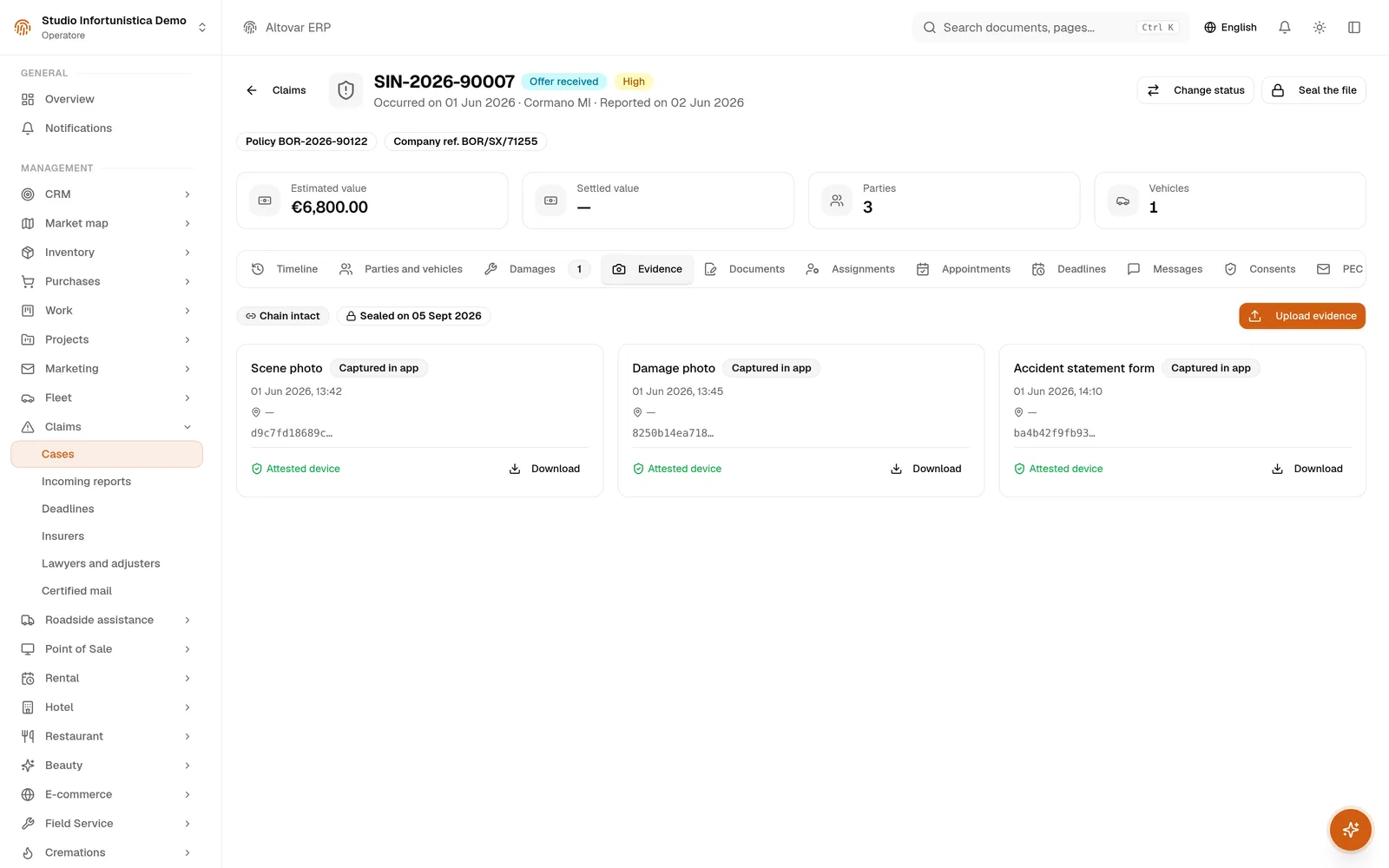
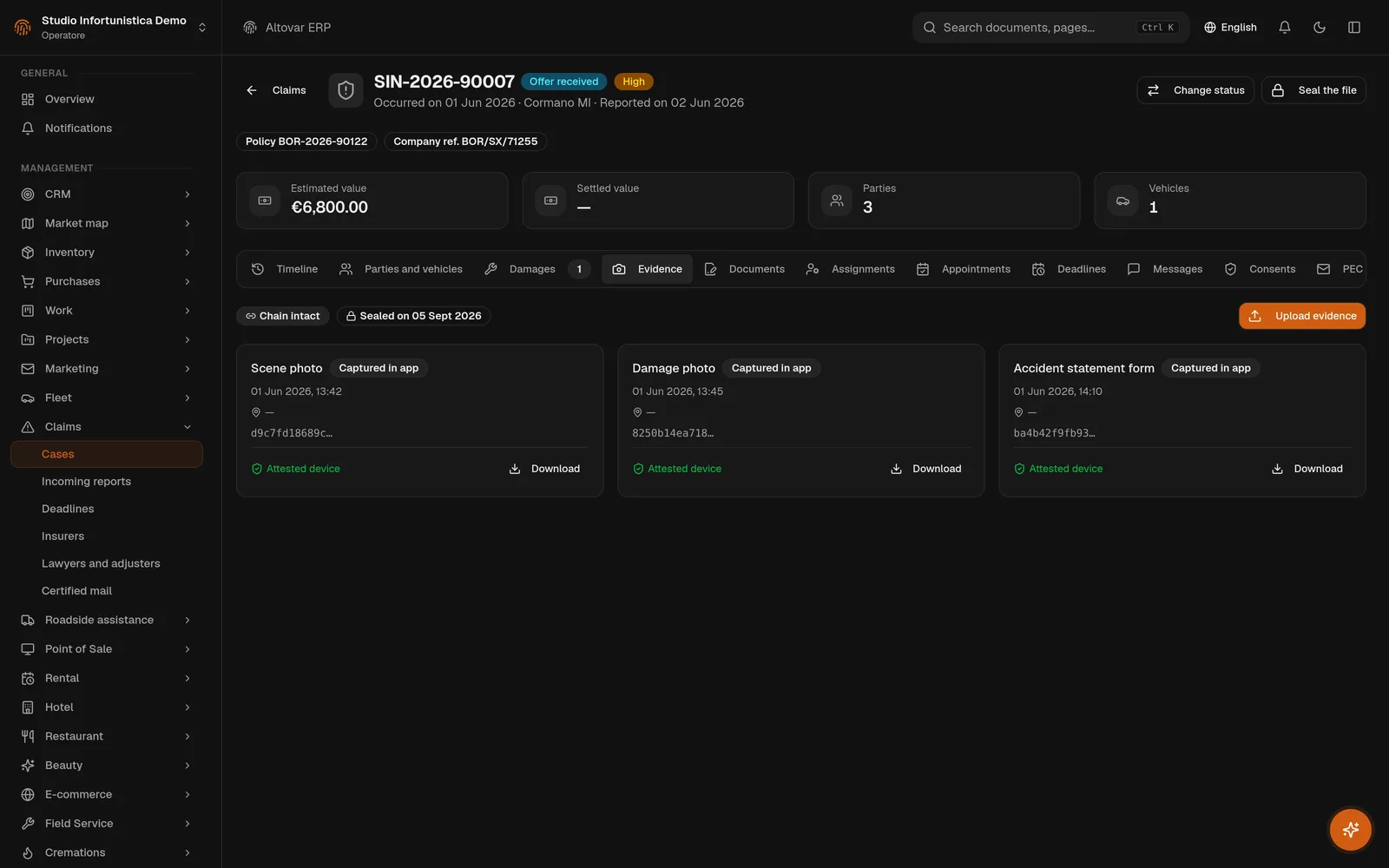
The injured party photographs inside the app: the gallery is disabled, so there is no picture taken three days later. The server hashes the bytes it received — never a hash the client hands it — and links each item to the one before. Alter a file and the link its successor recorded breaks. Remove one and the sequence has a hole.
Drag to tamper with an item. The chain is checked by recomputing it, not by trusting a flag.
Scene photograph
Damage photograph
Accident statement form
Insurance certificate
Chain intact — the file can be sealed Every item still matches the fingerprint its successor recorded.
Pillar two · the clock
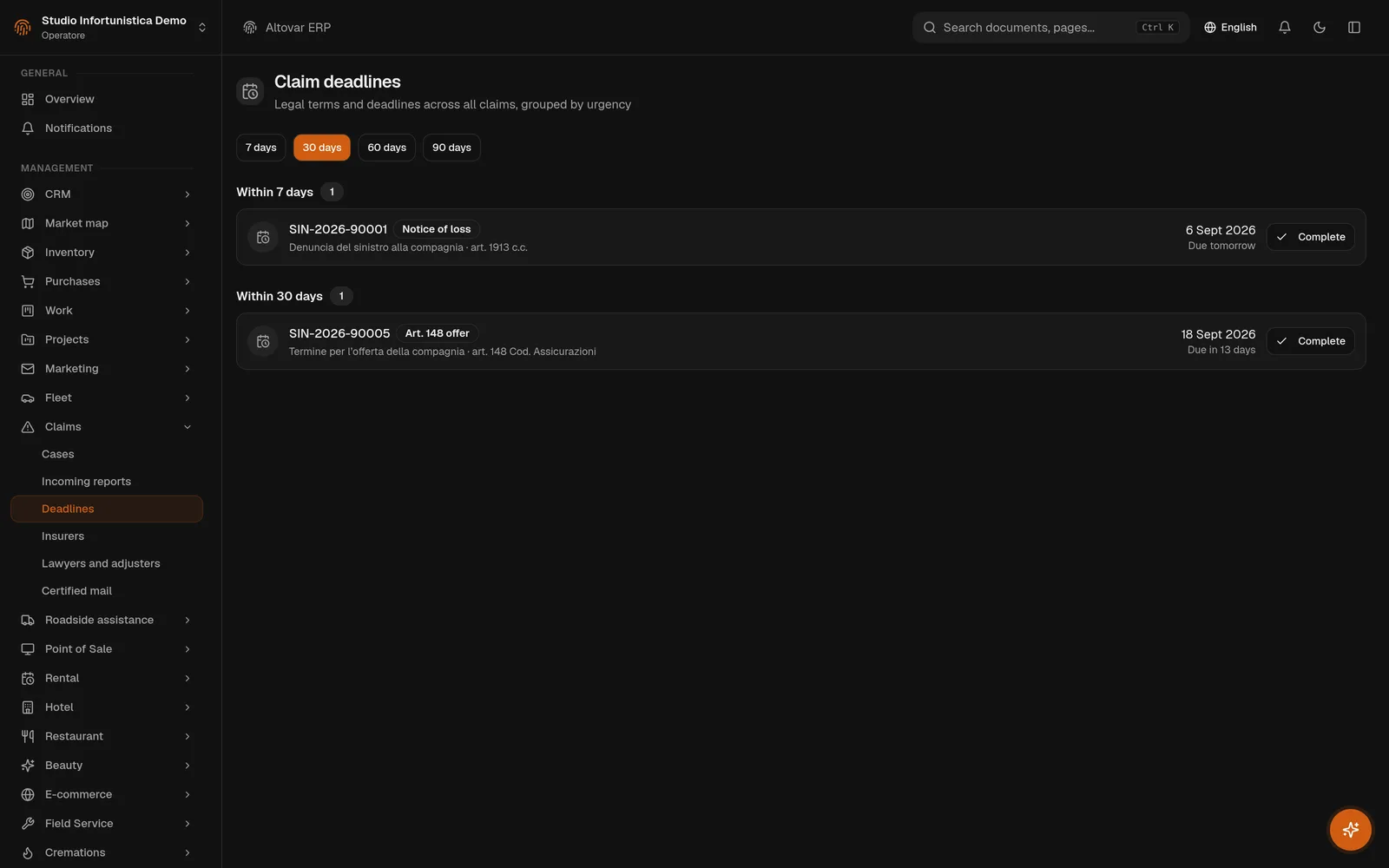
The competitor has a passive list of expiries. Here the deadlines are generated from the facts of the claim and pushed: a reminder to the file owner seven days out, an escalation the moment a blocking term runs out. The reminder timestamp is written before the notification goes out, so two overlapping runs never remind twice.
The same table the product uses. Calendar arithmetic, dates in UTC.
Notice of loss
art. 1913 c.c. · +3 days
Offer window
art. 148 ins. code · +60 days from the claim letter
Injury offer window
art. 148 ins. code · +90 days where there are injuries
Limitation period
art. 2947(2) c.c. · +2 years · blocking
In the example the claim letter goes out on the tenth day: the offer window is counted from there, not from the crash.
A blocking term that runs out raises the claim to urgent, writes a timeline entry and notifies the owner. It does not close the claim on its own.
Pillar three · the ledger underneath
The tools this vertical competes with bolted an invoice table onto a claims database. KAIROS is the other way round: the claims live inside an ERP that already issues electronic invoices through the national exchange, runs the payables cycle towards body shops and tow operators, keeps a receivables ledger, a document archive and payroll.
The commercial name of that ERP is EQUINOX. KAIROS is the vertical you buy on top of it, and it can be bought on its own.
Architecture
The injured party must never see a screen that looks like an admin console, and the public internet must never touch the one that does.
The only surface with the whole picture and the power to write. Every route checks a named permission before it checks the session.
A separate mobile application. A one-time code on the phone, not a workstation login: the person filing the claim is not, and must not become, a user of your management system.
A separate process on its own address with its own rate limits. It writes to the intake queue and nothing else, so abusing it costs you the queue, not the claims.
The lawyer, the appraiser and the body shop get a link, not an account. The token is the credential and it carries no server state.
Without its signing key the public bridge answers 503 on every versioned route. It fails closed by design.
The supply chain
The filter is applied inside the query, not by trimming the answer afterwards. Release the assignment and the links die with it, even the ones that had not expired.
Pick a role
Sees
Parties, vehicles, damages, timeline, deadlines, evidence, documents, messages
Does not see
The certified mailbox credentials
Sees
Vehicles, damages, evidence, appraisal deadlines
Does not see
Parties, legal documents, correspondence
Sees
Vehicles, damages, photographs
Does not see
Parties, amounts, deadlines, correspondence
Link lifetime: seven days by default.
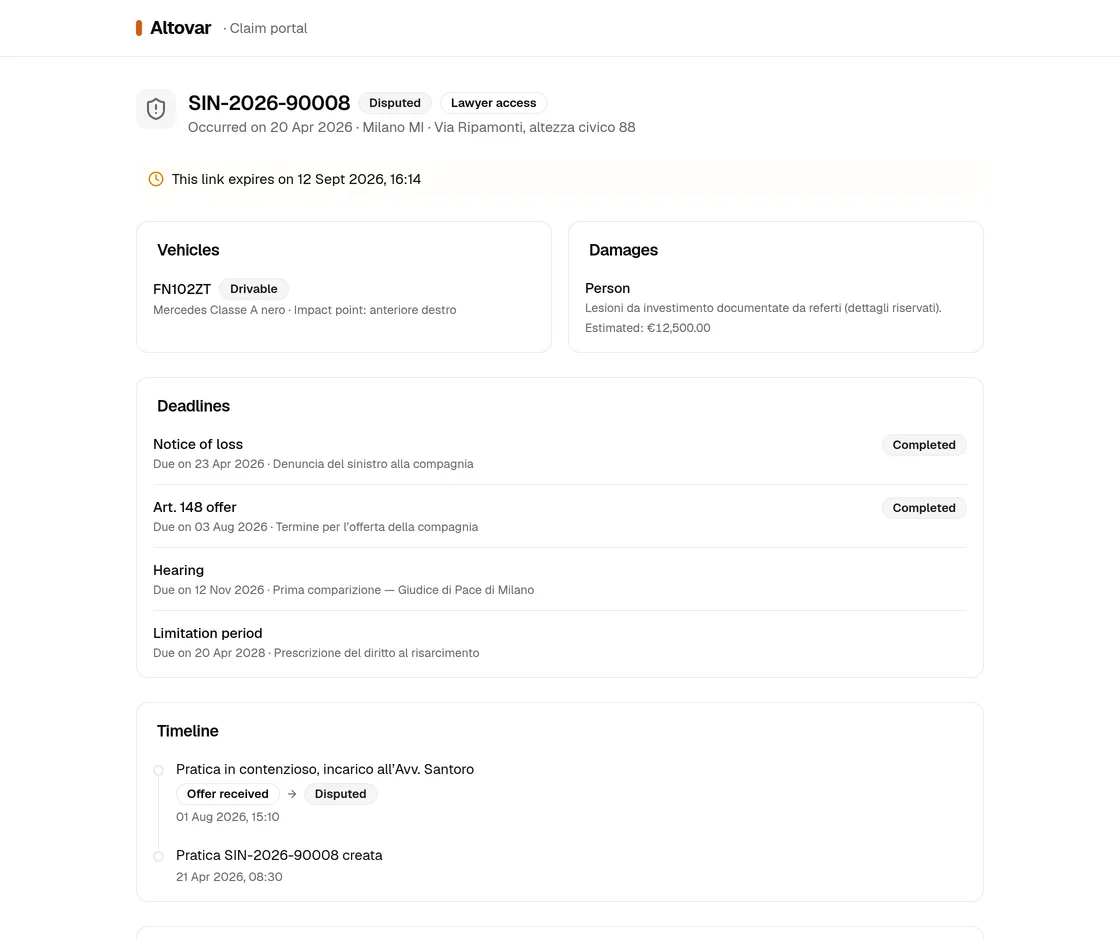
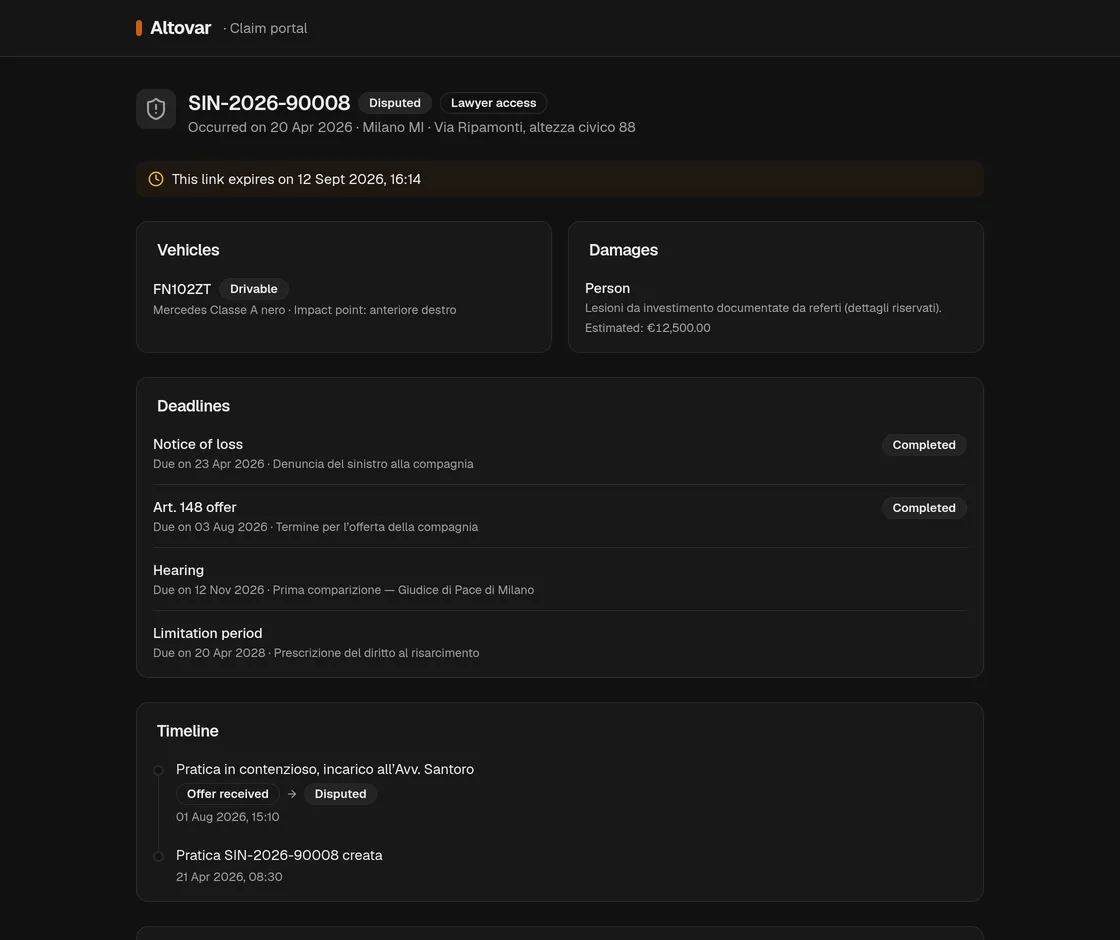
The portal interface is English-only today. It is on the list.
The product
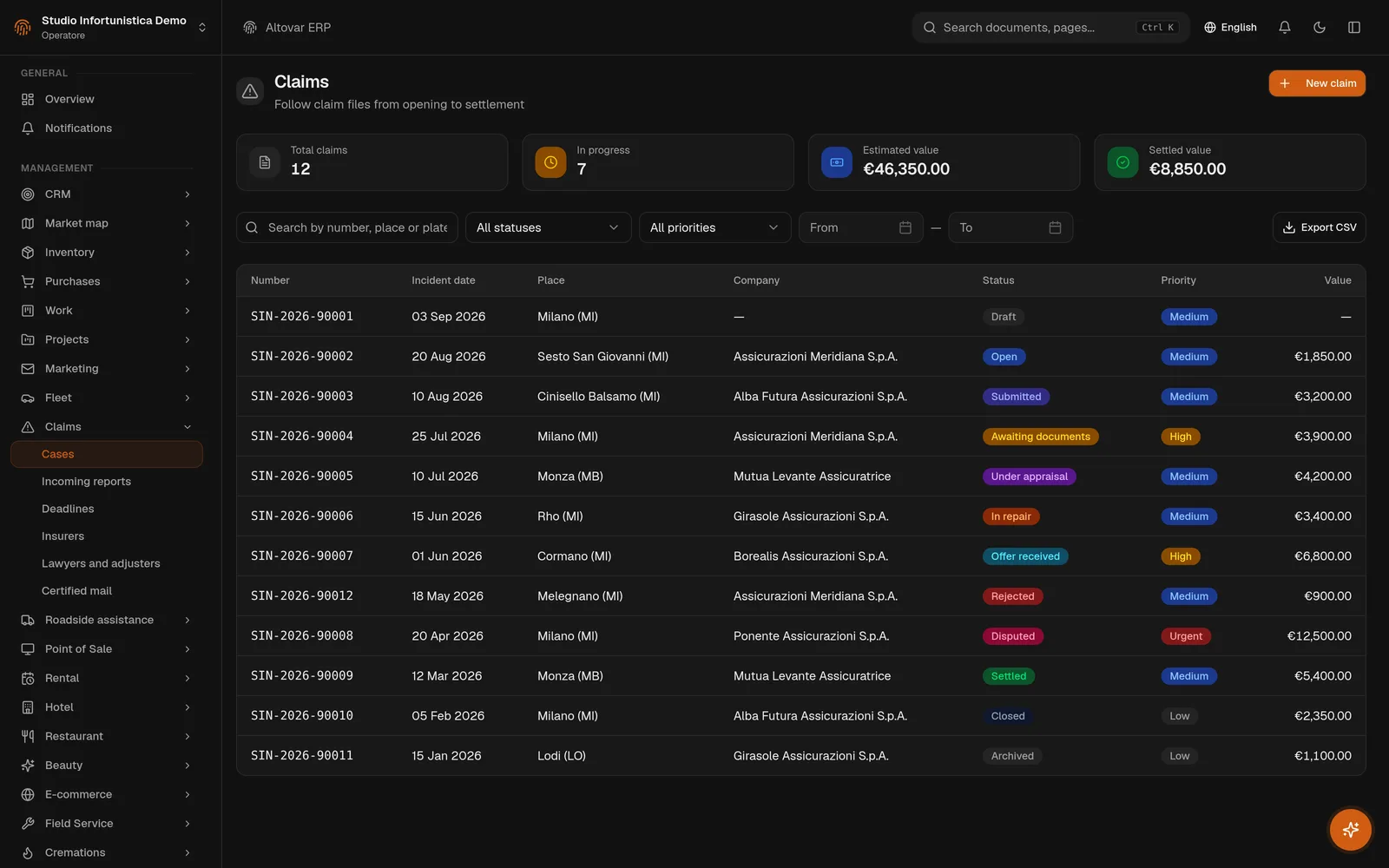
Every screenshot below comes from the product running against the demo dataset the product itself seeds: twelve claims, twenty-eight chained items of evidence, thirty-five deadlines, three roadside jobs.
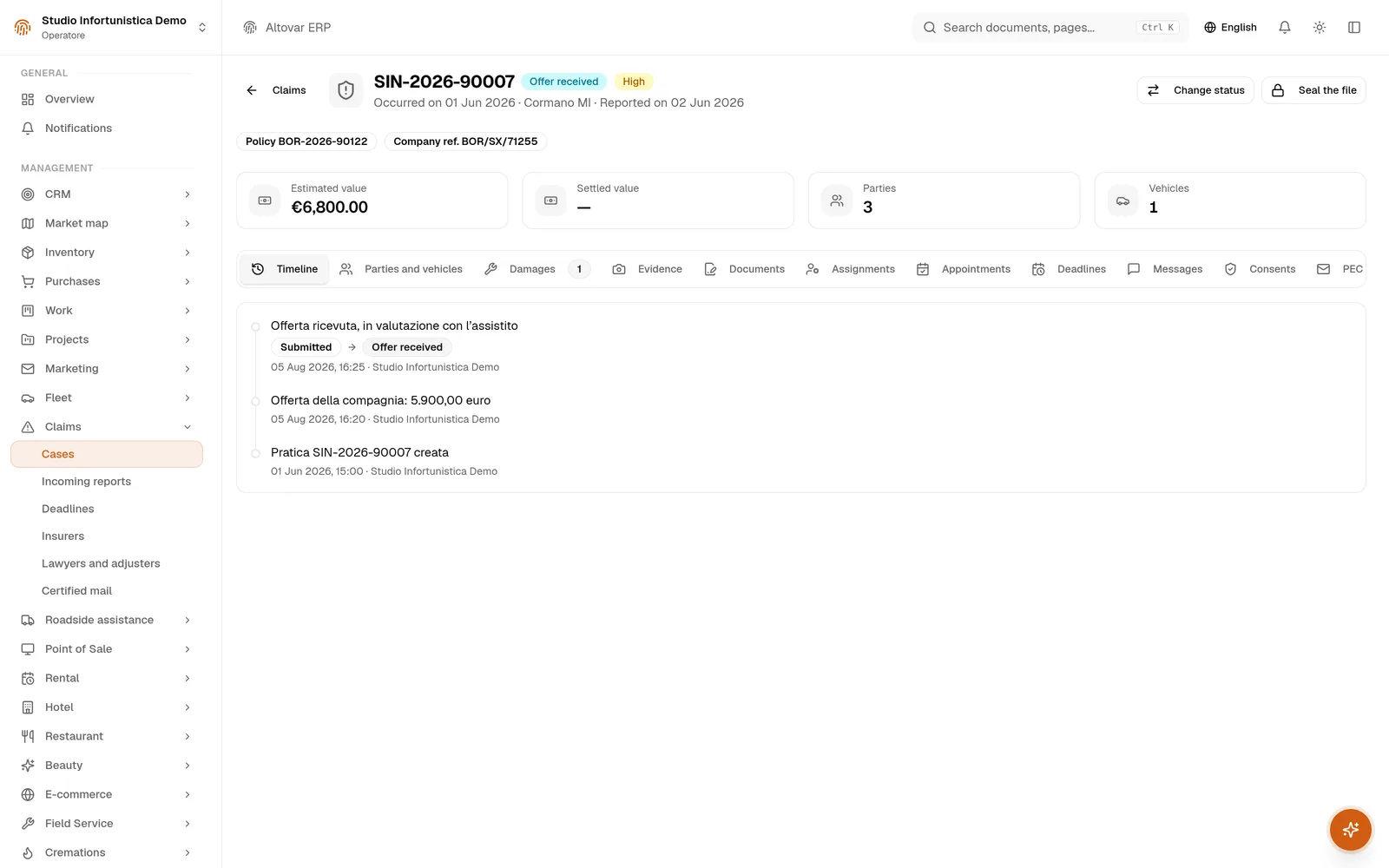
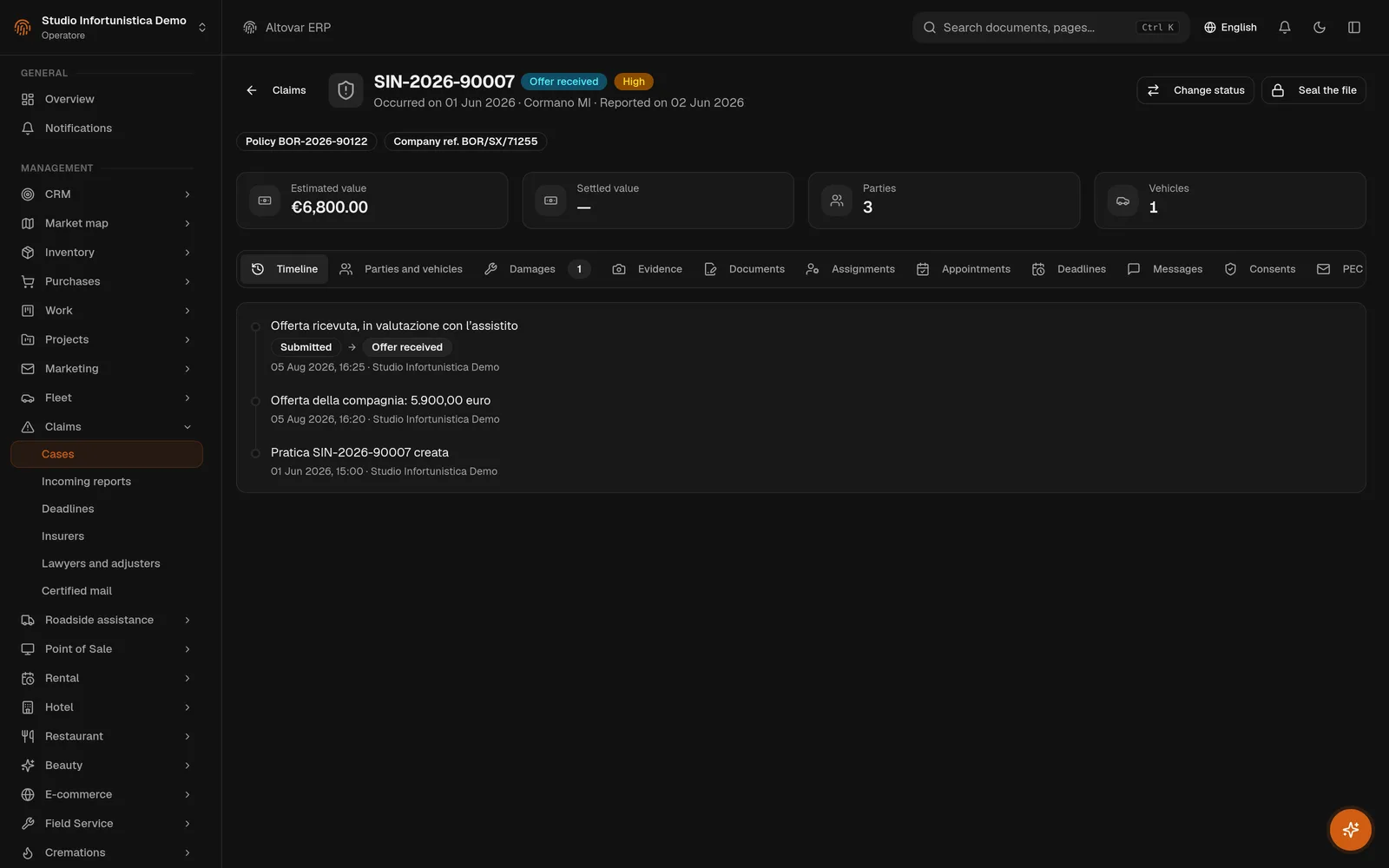
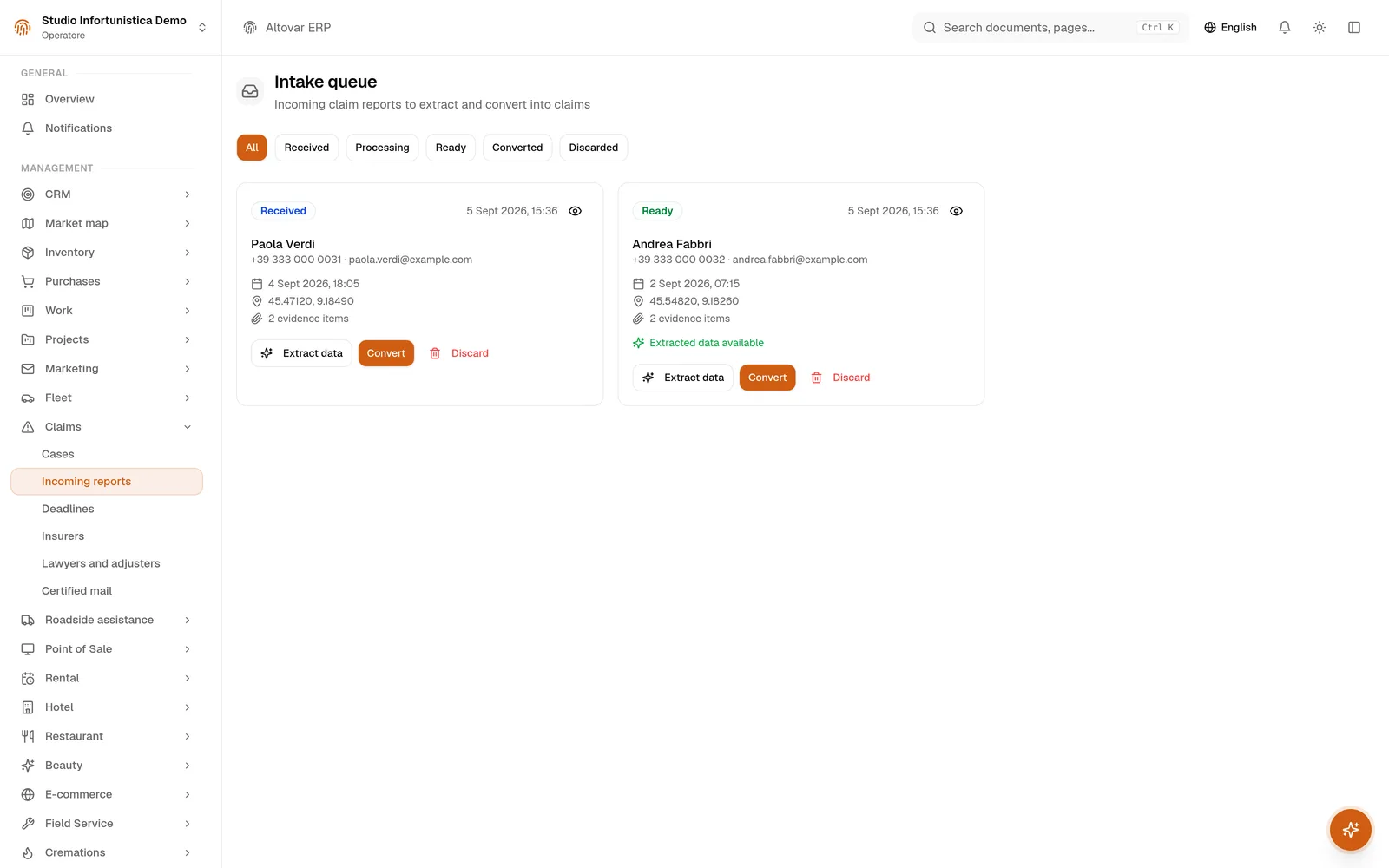
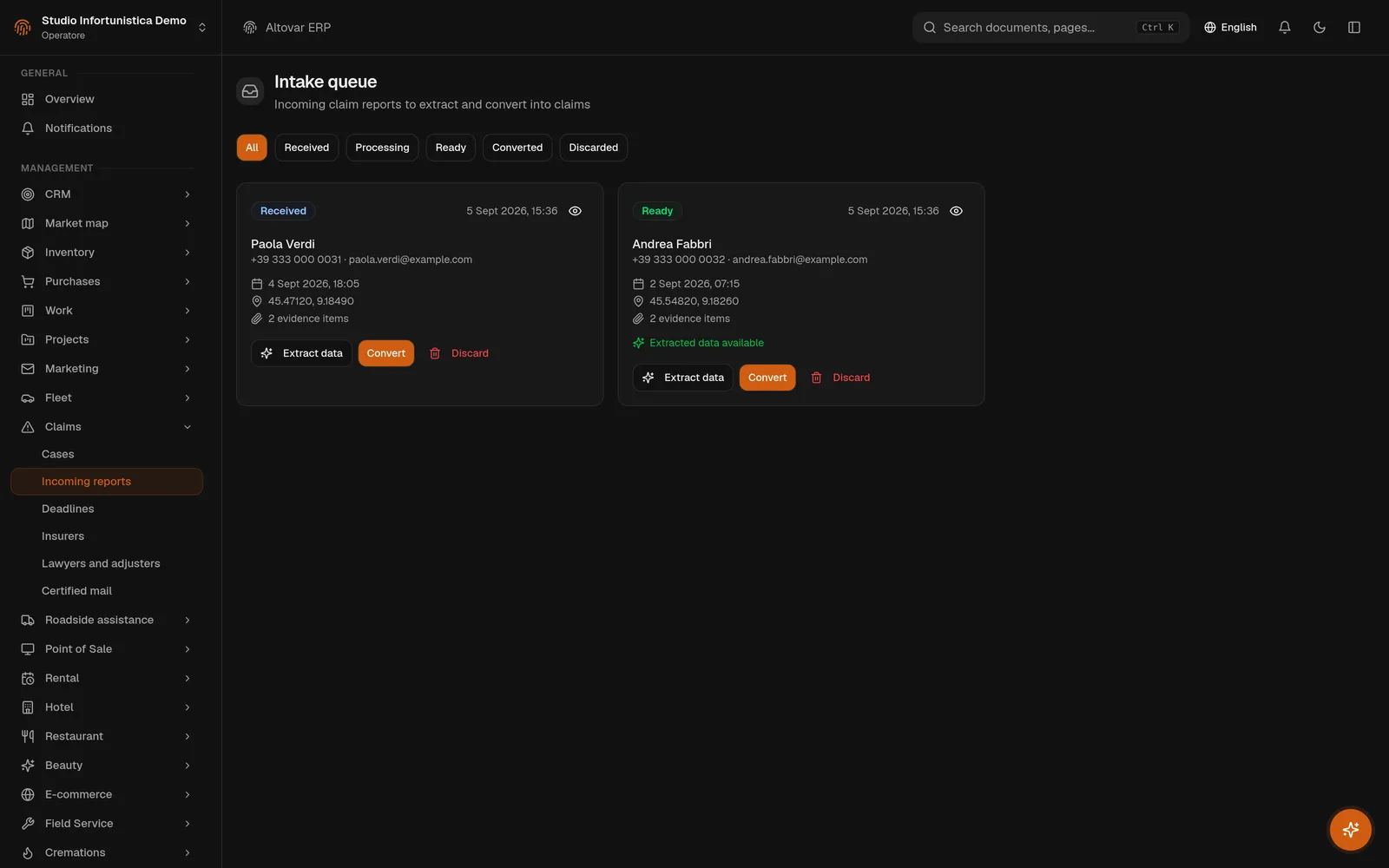
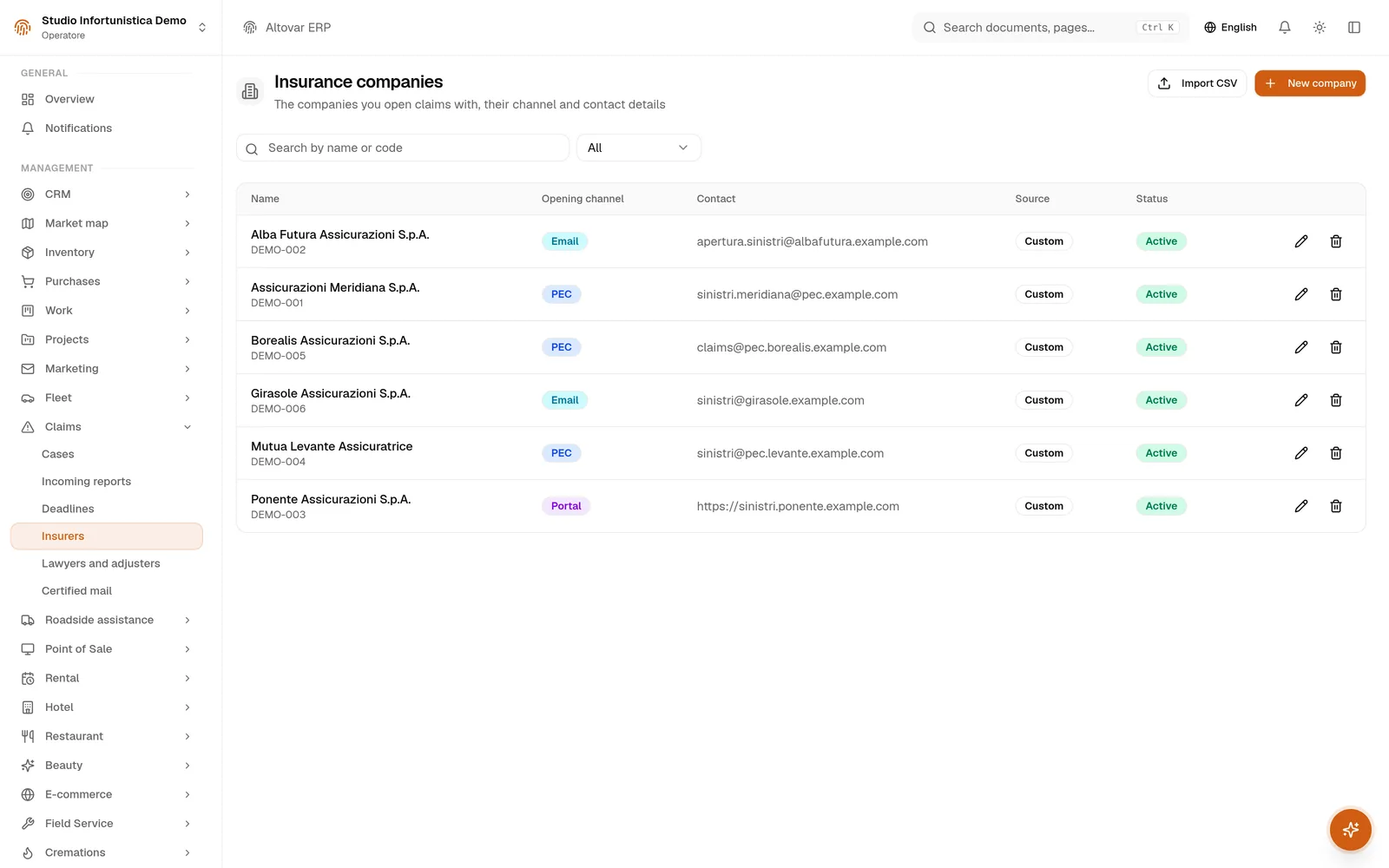
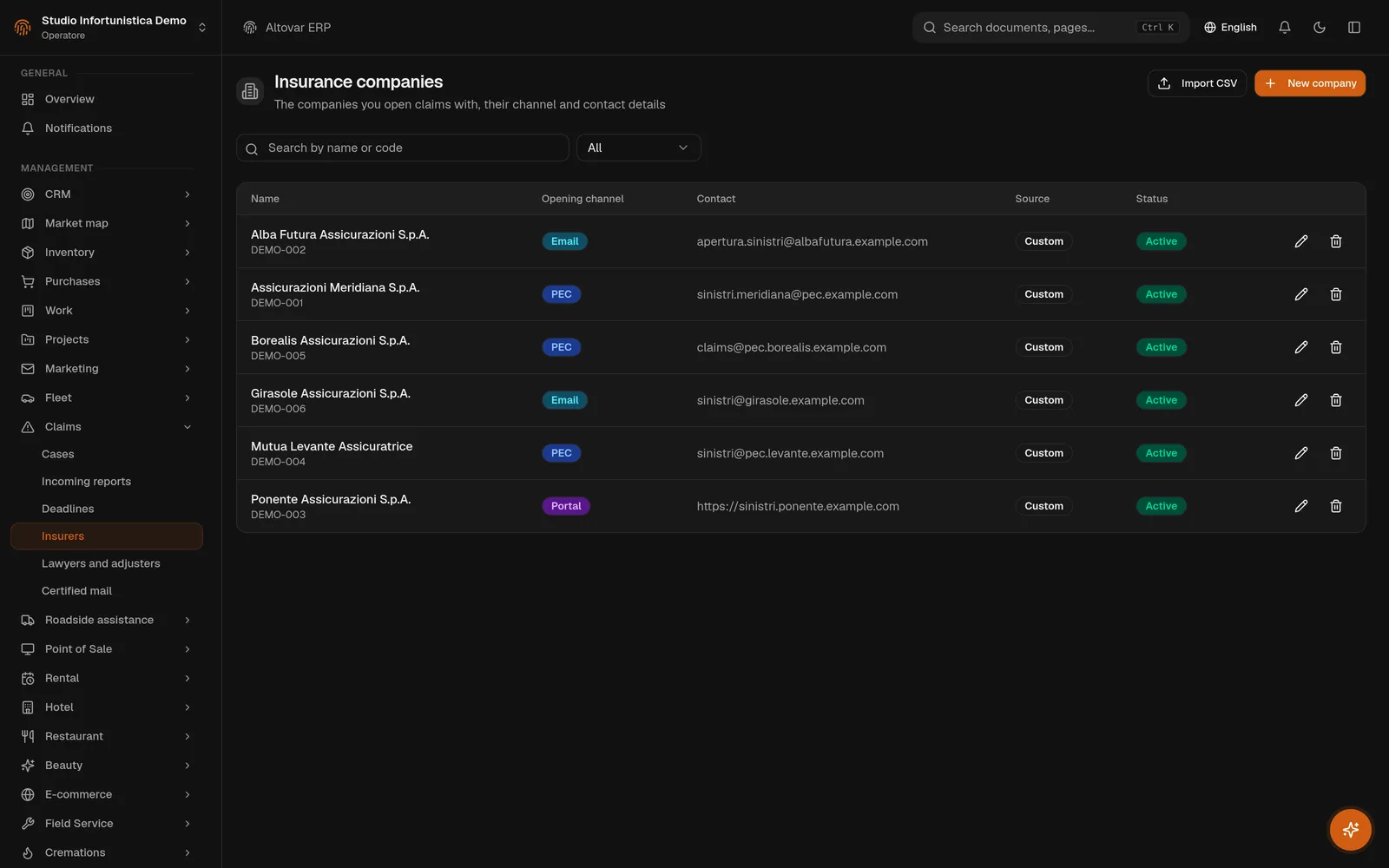
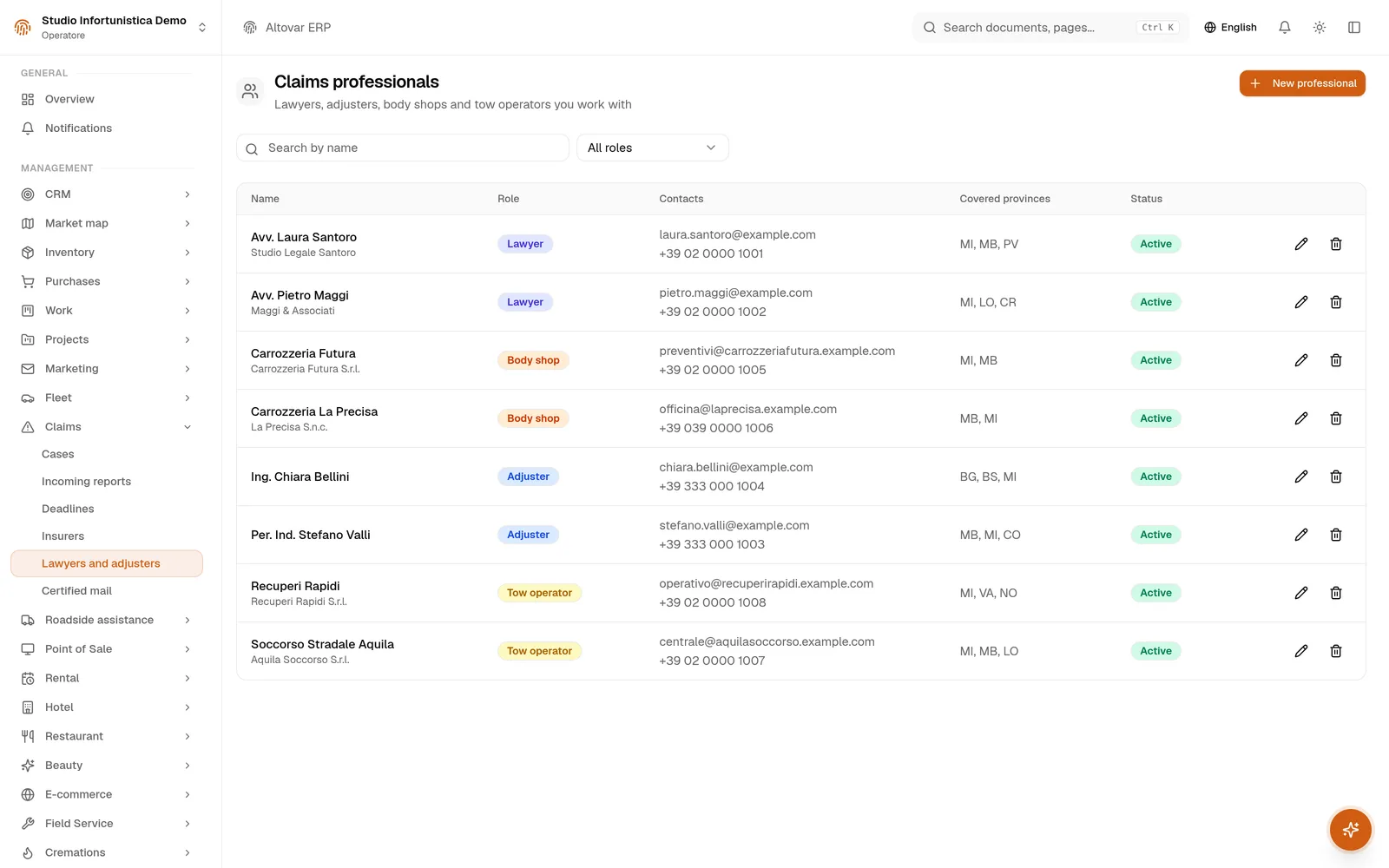
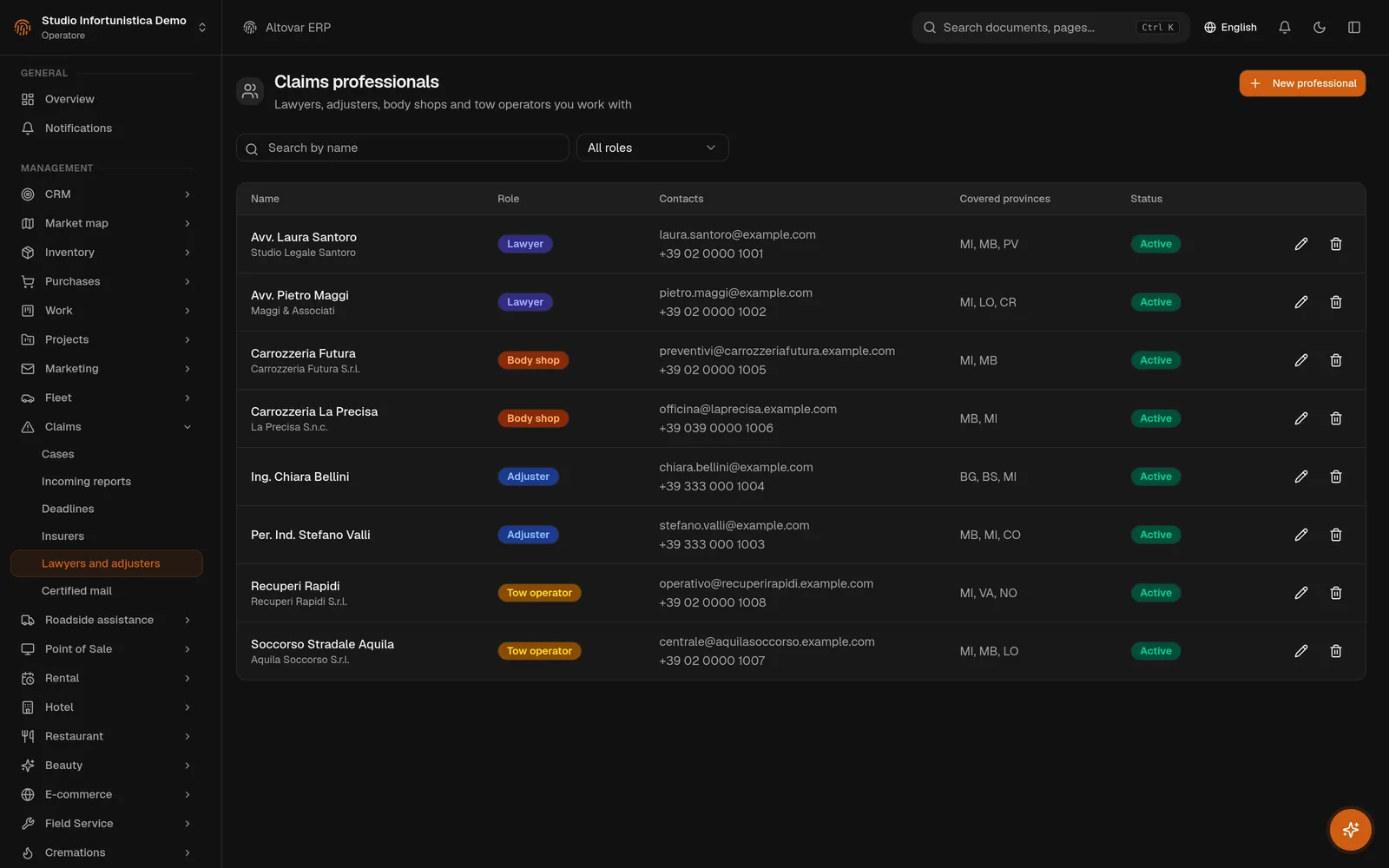
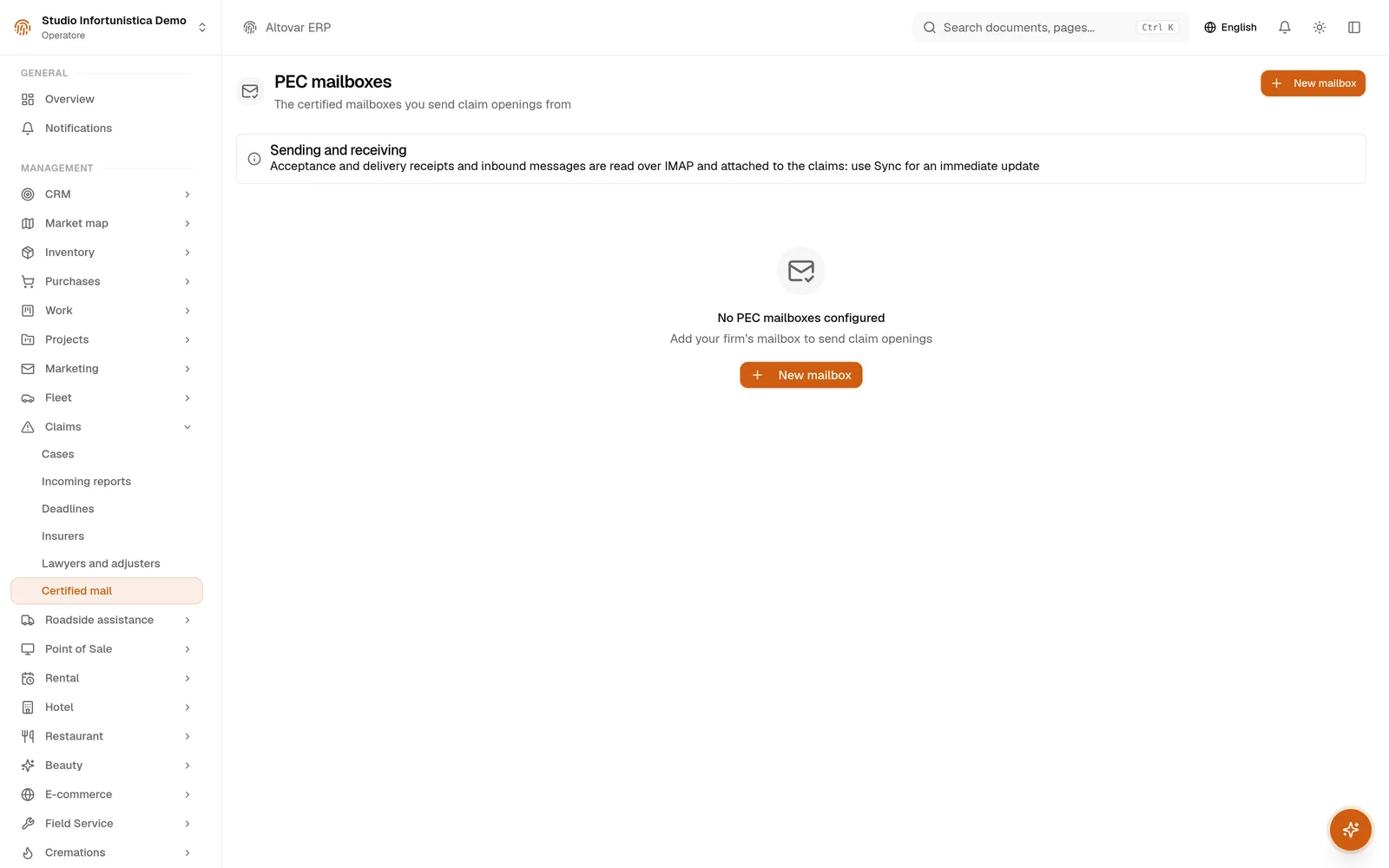
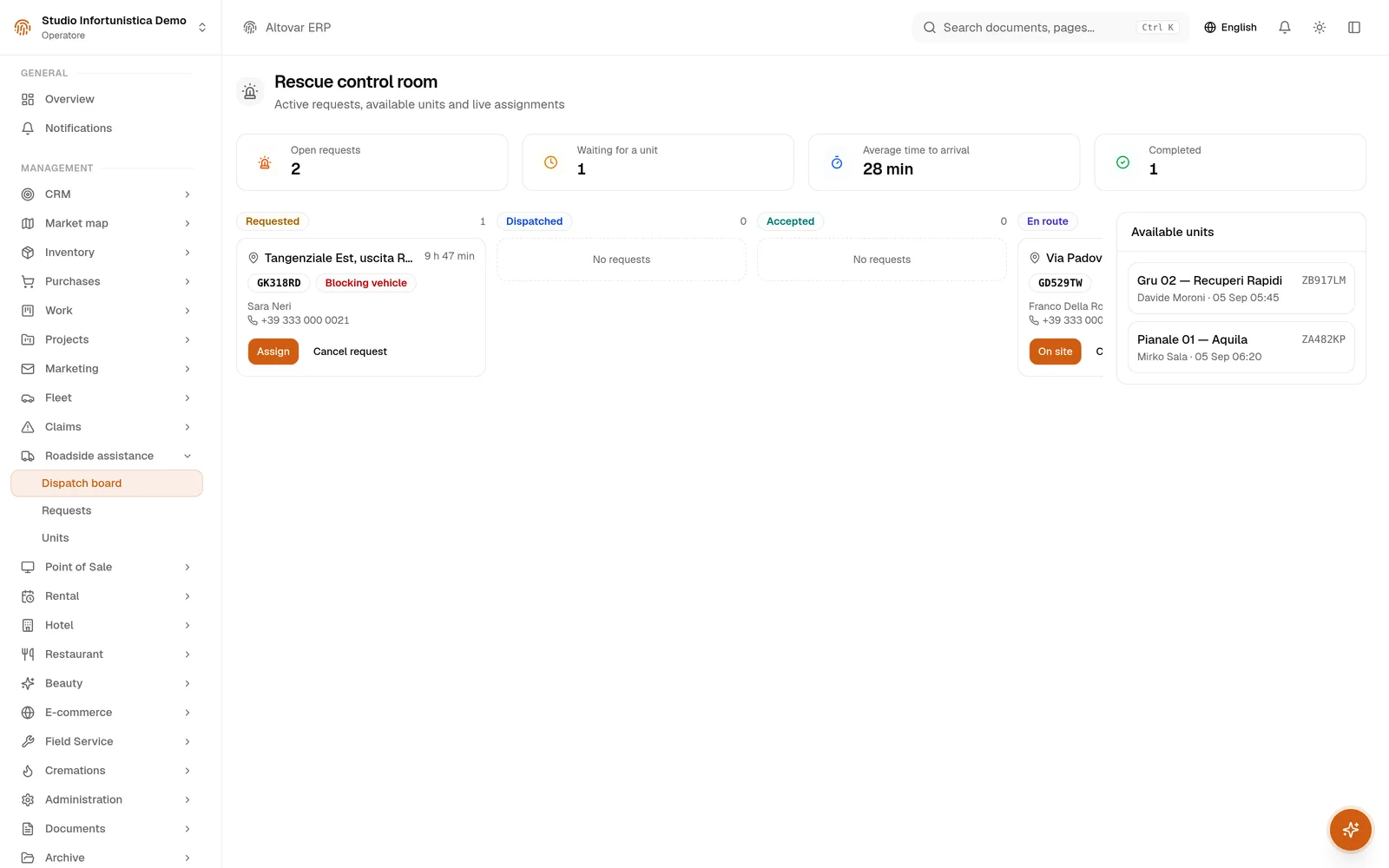
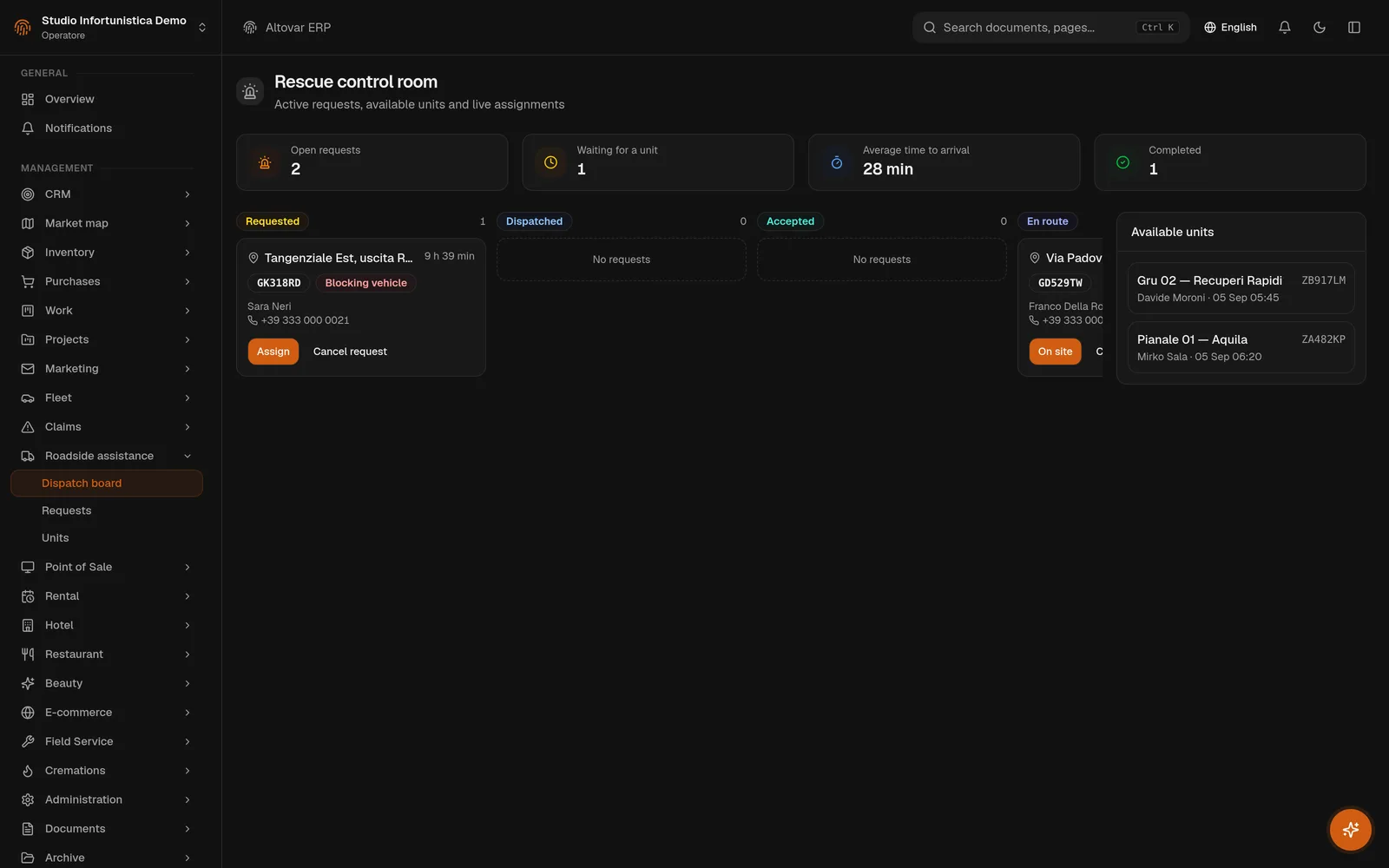
The application ships in five languages. In the other five the screenshots show the English interface.
Who it is for
You take the mandate, you run the claim against the insurer, you get paid on what you recover. Losing a file to an incomplete bundle or a missed limitation period is the most expensive thing that happens to you.
For claims firmsYou are next to the driver while they are still shaken, before the insurer, before the lawyer, before the body shop. Dispatch, proof of the job and the invoice draft, sold on its own.
For roadside operatorsYou do not buy a claims system from us. You get counterparties who open claims cleanly, with receipts you can verify and a bundle you cannot dismiss as undatable photographs.
For insurersHonesty
A capability we cannot demonstrate is not on this site. The electronic signature is a simple one, the qualified timestamp is optional and currently switched off, there is no automatic damage estimate from photographs and there is no round-the-clock operations desk. All of it, with the reasons, is on one page.
Half an hour is enough to see a claim opened from the app, the evidence sealed and the legal clock start ticking.