For roadside operators
Whoever gets there first owns the claim.
The tow truck is beside the driver before the insurer, before the lawyer, before the body shop. That moment is worth more than everything that follows it, and most of the trade still runs it on a phone call and a notebook.
Dispatch
Request, unit, acceptance, closure.
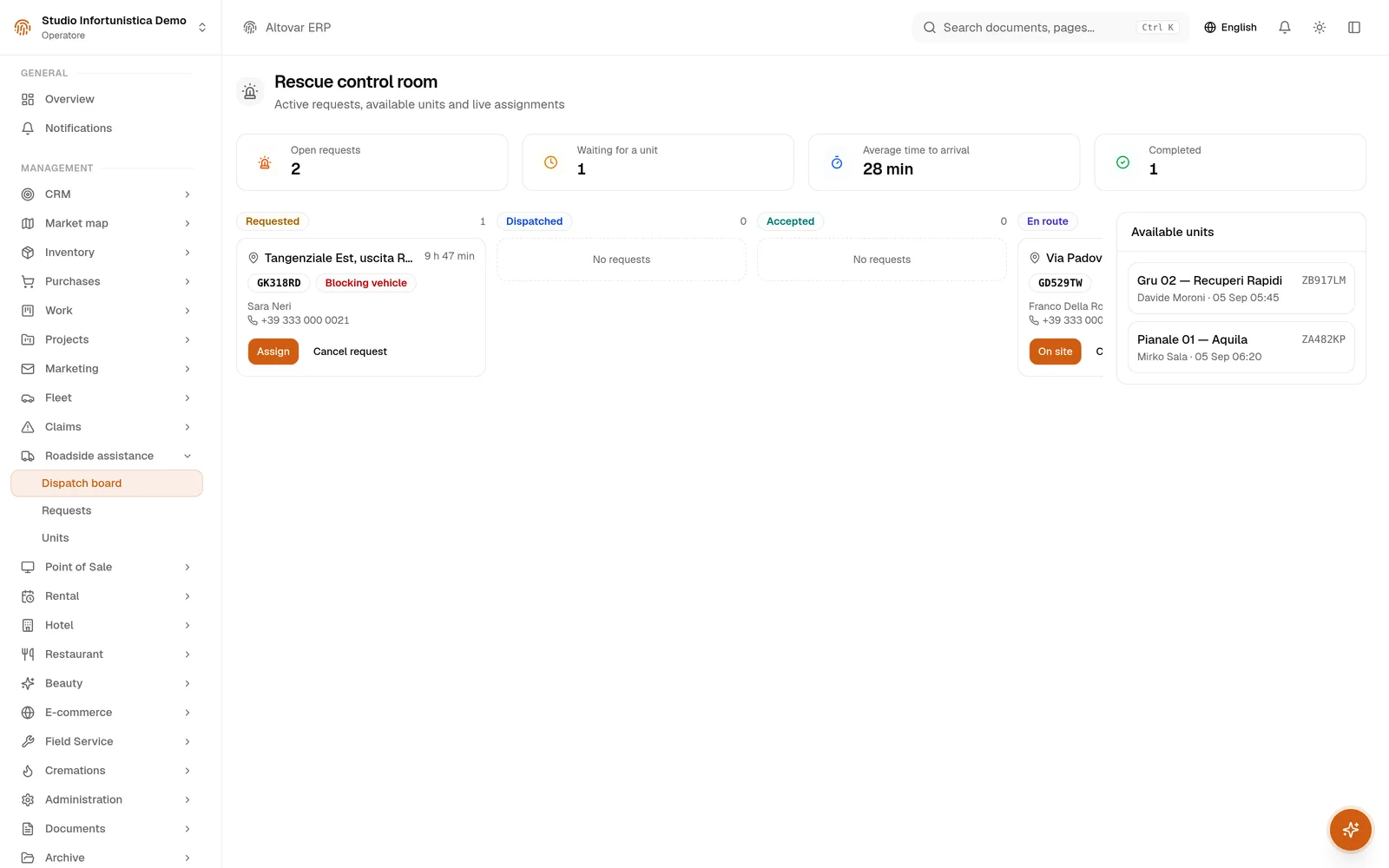
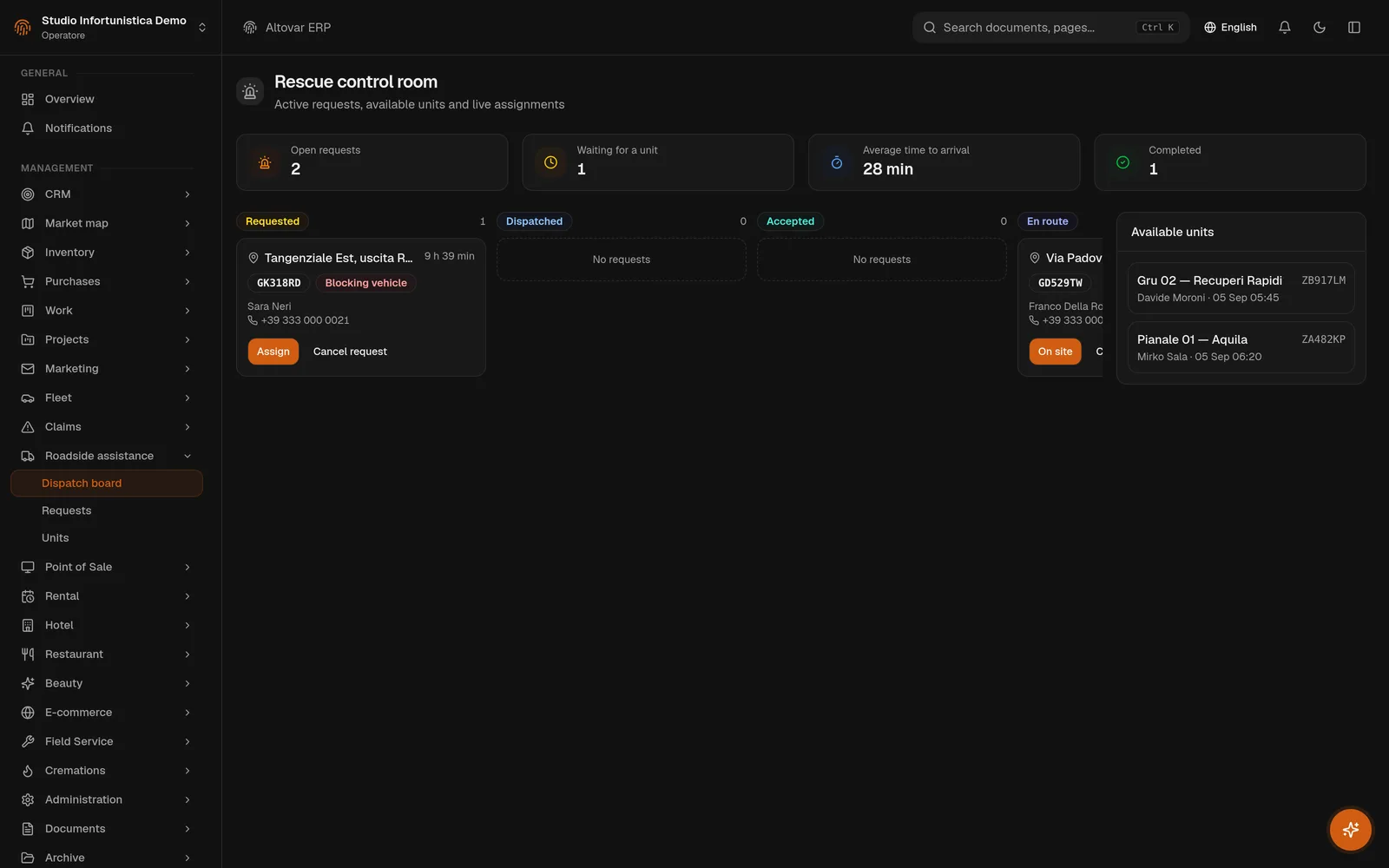
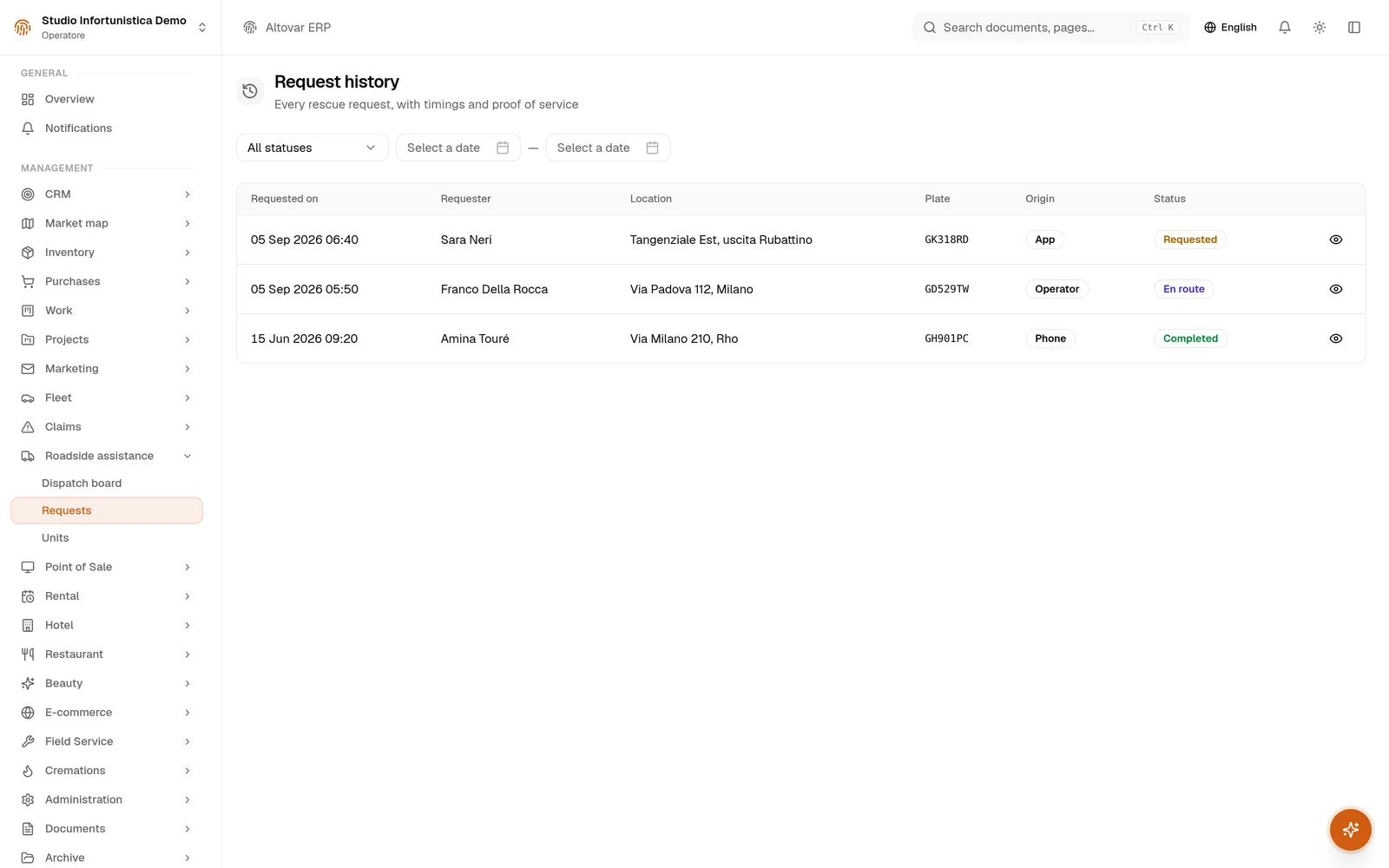
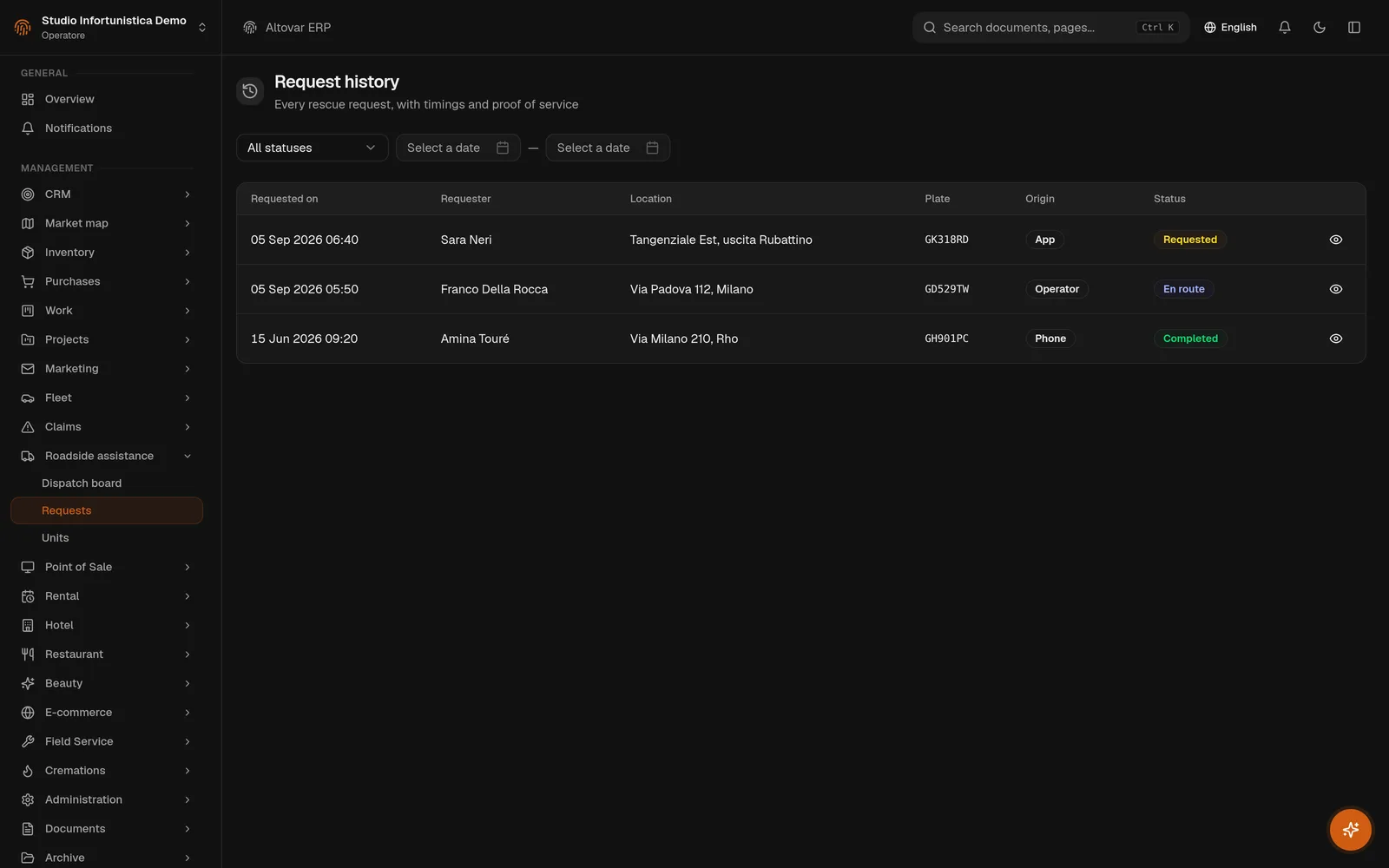
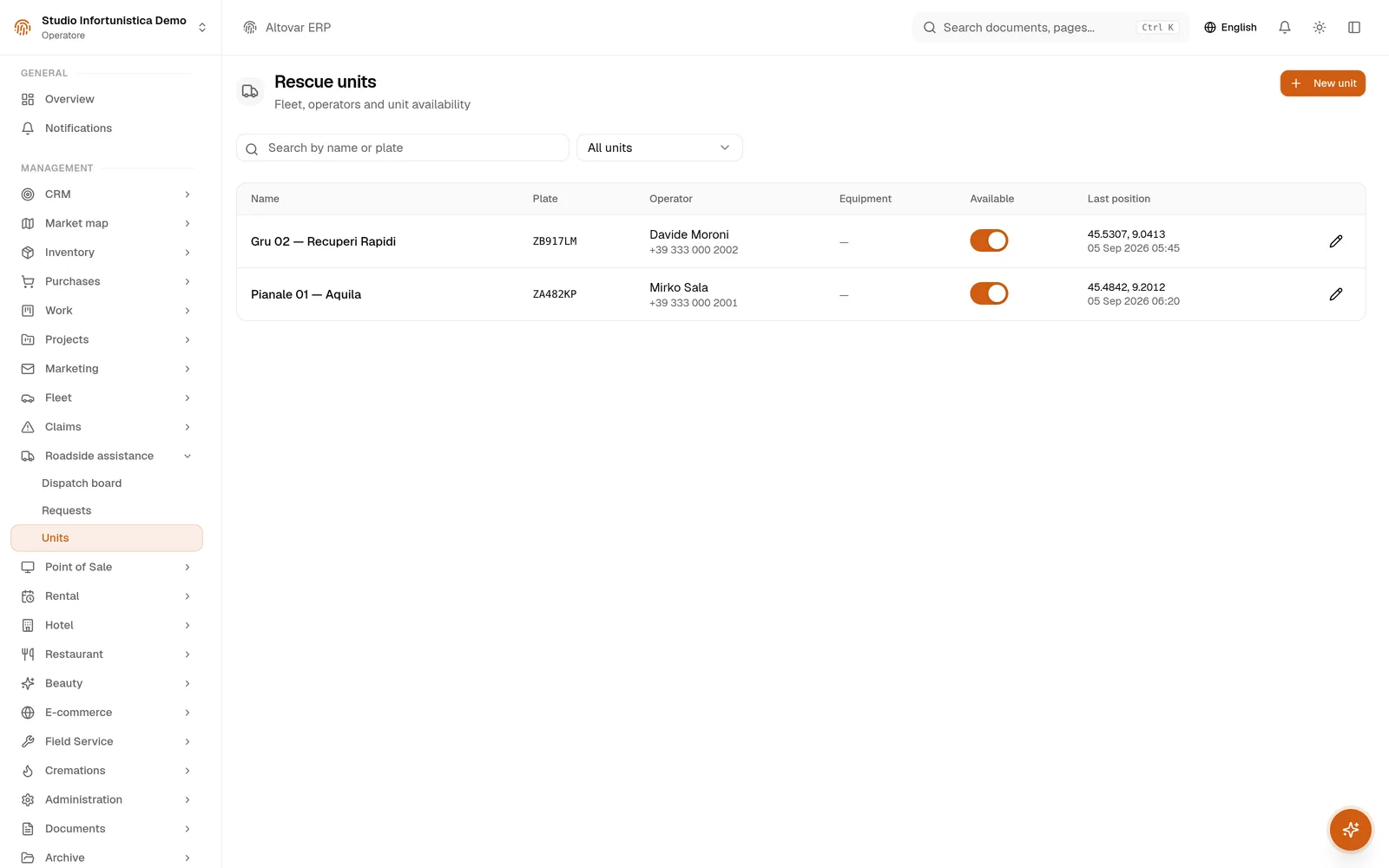
A request arrives with its position and its caller. You assign a unit, the job moves through its states and the proof of the intervention stays attached to it. A job does not need an open claim to exist: the roadside side of this product stands on its own.
- Requests from the app, from the desk or from a phone call written down
- Your units with their plate, their type and their availability
- Photographic proof kept on the job, claim or no claim
Invoicing
The completed job becomes an invoice draft.
One call turns a finished job into a draft invoice in the document engine. A draft, waiting for a human: nothing is issued or transmitted on its own. Ask twice and you get the same document back, not a second one.
The way up
Start here, sell the claim later.
Every job you run is a claim somebody is going to open. When you decide to run it yourself, the claims module switches on over the same data and the same customers. It is a licence, not a migration.
What roadside does not include
- There is no manned operations desk. The software dispatches; the people are yours.
- There is no live map of your fleet moving. A job carries the position it was reported at.
- Push notifications to the driver need a messaging provider to be switched on first.
Bring us a real claim and we will run it end to end.
Half an hour is enough to see a claim opened from the app, the evidence sealed and the legal clock start ticking.